
Currently Empty: ₹0.00
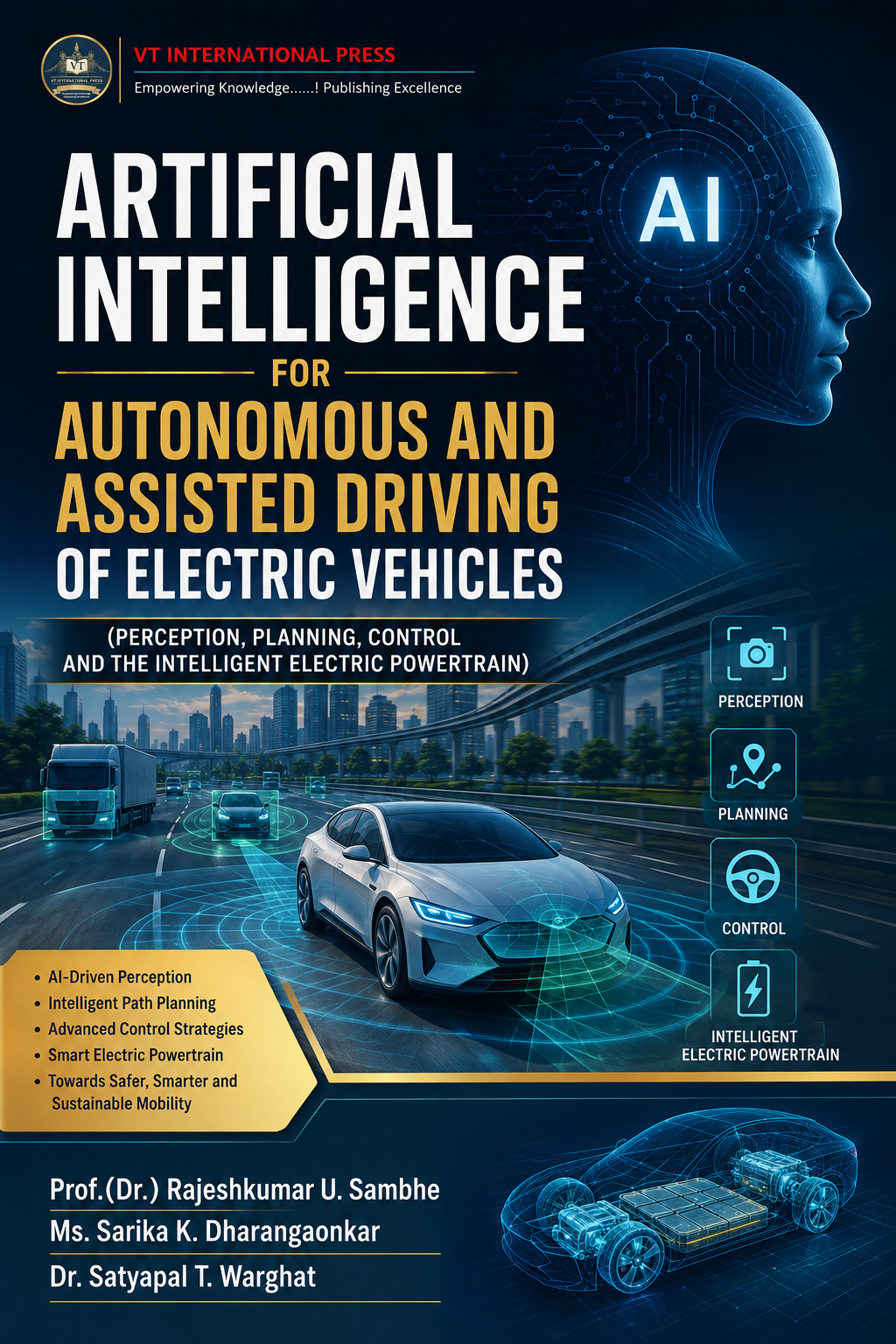
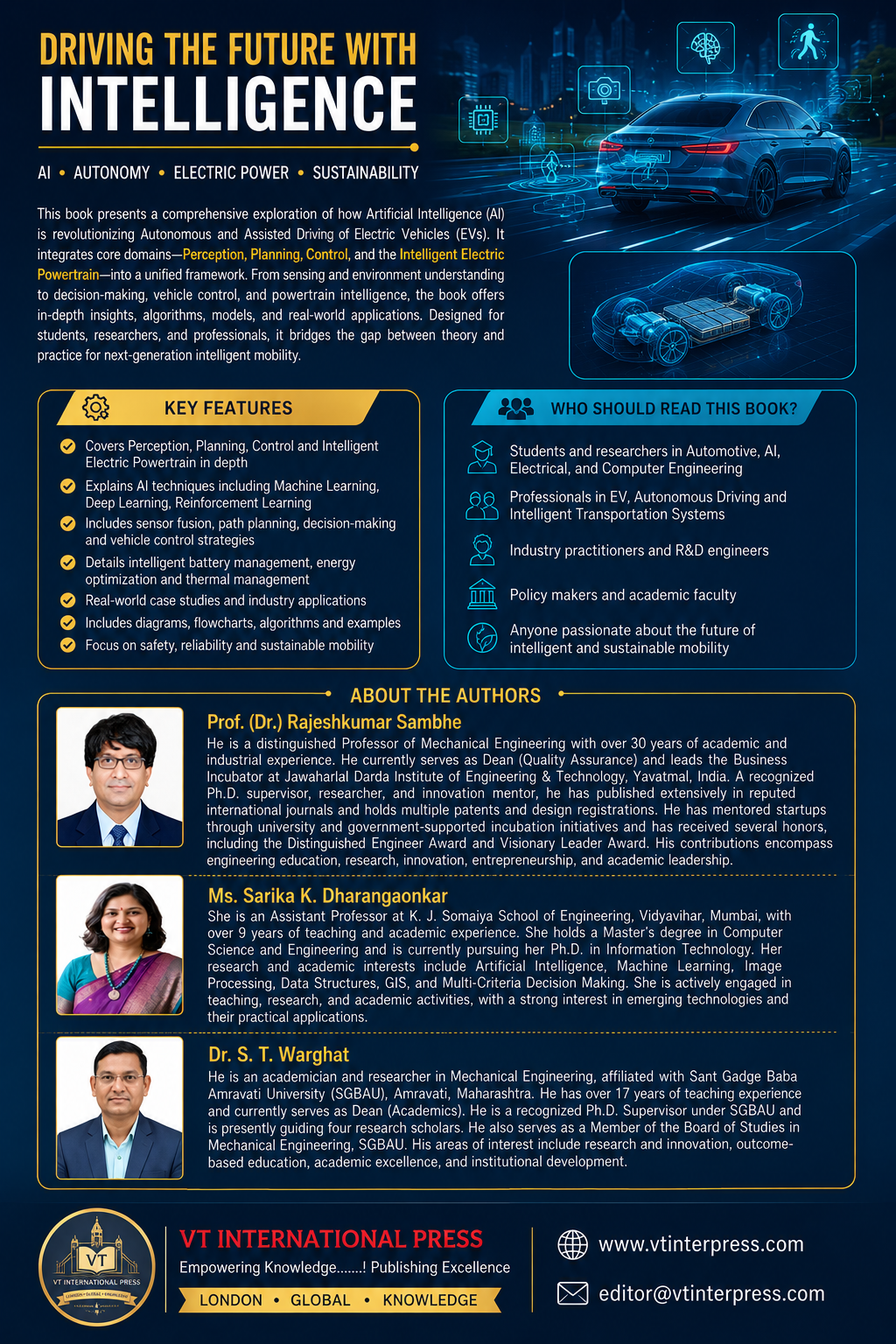
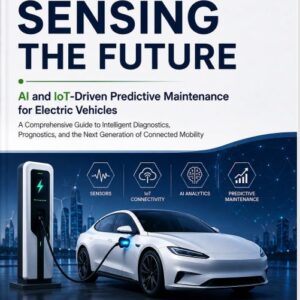
The automobile is being reinvented along two axes at once. Along one axis, the internal-combustion powertrain is giving way to the electric drivetrain, with its battery, power electronics and electric machines. Along the other, the human driver is being progressively assisted, and in some settings replaced, by machine perception, prediction, planning and control. These two transformations are frequently treated as separate engineering stories. This book takes the position that they are deeply intertwined: the electric vehicle is not merely a convenient platform on which to mount an automated driving system, and automated driving is not merely a feature layered onto an electric car. Energy and autonomy shape one another.
Artificial intelligence is the connective tissue. Modern perception rests on deep neural networks; prediction and planning increasingly borrow from learning-based methods; and the management of the battery, the thermal system and the vehicle’s energy budget is itself becoming a data-driven, predictive discipline. An automated electric vehicle is, from one point of view, a distributed computer that must perceive the world, decide how to move through it, and do so within a tight and safety-critical energy and thermal envelope.
This book is organised into six parts. Part I establishes foundations: the convergence of autonomy and electrification, the architecture of the electric powertrain, and the machine-learning and deep-learning methods used throughout. Part II treats perception, from sensing and fusion through computer vision to detection, tracking and segmentation. Part III addresses localization and mapping, motion planning and decision-making, and vehicle control. Part IV turns to the electric powertrain as an object of intelligence in its own right: battery management and state estimation, range and eco-driving, and charging, the smart grid and vehicle-to-grid operation. Part V considers assisted driving and the human, covering advanced driver-assistance systems and driver monitoring. Part VI examines the system-level concerns that make deployment possible: functional safety and verification, cybersecurity, edge computing and MLOps, and the ethical and regulatory landscape.
The intended reader is a graduate student, researcher or practising engineer who has a working command of linear algebra, probability and programming, and who wishes to see how the pieces fit together rather than to study any single piece in isolation. Each chapter opens with an abstract, develops its subject with figures and tables, highlights central ideas in key-point boxes, and closes with review questions. Cross-references knit the chapters together so that, for example, the energy cost of computation in Part VI can be read against the energy budget of Part IV, and the perception stack of Part II can be read against the safety argument of Part VI.
A word on scope and standards. The field moves quickly, and any book that tried to capture the latest benchmark result would be obsolete before it was printed. The emphasis here is therefore on durable structure: the reasons a sensor suite is arranged as it is, the reason a safety case is built the way it is, the reason a battery model takes the form it does. Where standards are named, they are named because they anchor real engineering practice. The reader is encouraged to consult the authoritative texts of those standards for normative detail.
Original price was: ₹700.00.₹500.00Current price is: ₹500.00.




There are no reviews yet.